

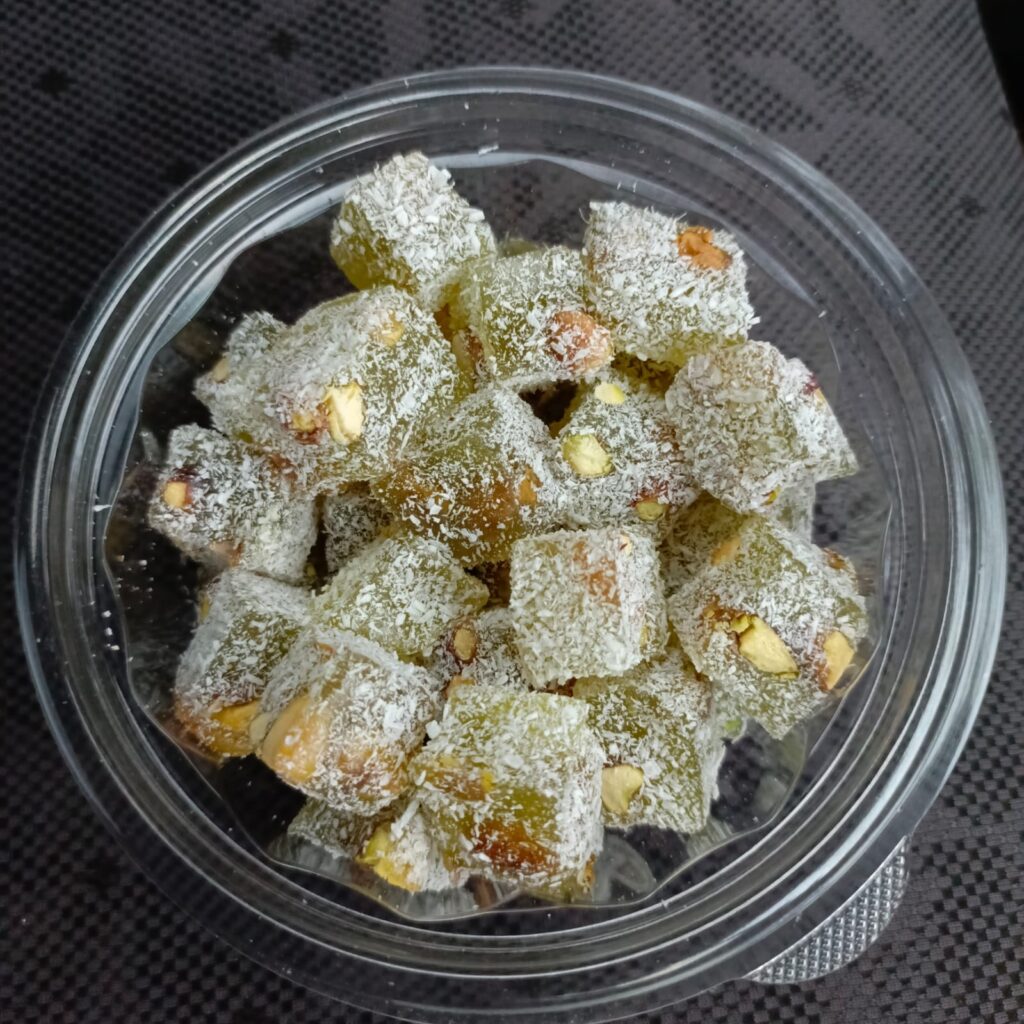
Turkish Delight, known as lokum in its homeland, is more than just a sweet treat. It’s a confection with a rich and storied past, a symbol of luxury and hospitality that has captivated palates for centuries. To truly appreciate lokum, you have to journey back to the heart of the Ottoman Empire.
Born in the Palace Kitchens
The true origin of lokum is a subject of sweet debate, but most historians agree its modern form was perfected in the kitchens of the Ottoman palace. Legend credits Haci Bekir, a confectioner who arrived in Istanbul in the late 18th century, with creating the delicate recipe we know today. He used a new ingredient—cornstarch—to perfect the soft, gel-like consistency that sets lokum apart from its earlier, rougher predecessors.
Lokum quickly became a favorite of the Sultan himself. Its refined texture and rosewater flavoring were a welcome change from the tough, syrupy sweets of the era. This new confection was not just for eating; it was a sign of prestige. Sultans would often offer it to foreign dignitaries as a gesture of goodwill and a showcase of Ottoman opulence.
The Sweet Taste of Hospitality
As its fame spread beyond the palace walls, lokum became a cornerstone of Turkish culture. It transformed into a beloved symbol of hospitality and community. In Turkey, it’s a common practice to offer lokum to guests as a welcoming gesture, often served with a cup of strong Turkish coffee or tea. The act of sharing these sweets is a way to express friendship and respect.
From Istanbul to the World
Lokum’s journey to global fame began in the 19th century when a British traveler discovered the sweet and brought it back to England. He gave it the name “Turkish Delight,” and the rest is history. The sweet’s unique texture and exotic flavors quickly charmed the Western world, and it soon became a popular import, forever cementing its place as a classic international delicacy.
Today, lokum continues to be crafted with the same dedication to tradition. From the classic rose and pistachio flavors to more modern fruit varieties, each piece carries with it a taste of history—a sweet secret passed down from the Sultan’s court to be enjoyed by all.